If you’ve been researching ways to address facial aging, chances are you’ve come across both surgical and non-surgical options and probably felt a little overwhelmed by the sheer number of choices. That’s completely understandable. The truth is, there’s no single right answer for everyone. What works beautifully for one patient may not be the best fit for another. What I want to do here is give you a straightforward, honest breakdown of what each approach can and can’t do, so you can walk into any consultation feeling genuinely informed.
What Are We Actually Comparing?
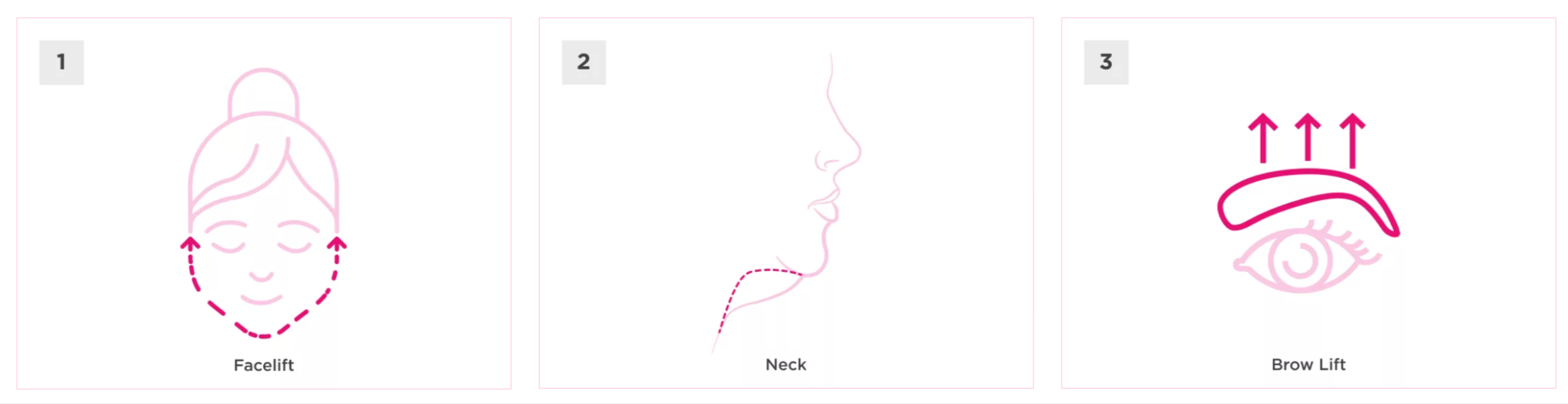
On the surgical side, we’re primarily talking about a facelift (rhytidectomy), neck lift, and brow lift procedures designed to physically reposition and tighten the underlying tissues of the face and neck.
On the non-surgical side, the options available at Transform include:
- Anti-wrinkle injections (botulinum toxin)
- Dermal fillers (hyaluronic acid and other volumizers)
- HIFU skin tightening (High-Intensity Focused Ultrasound)
- RF Microneedling (radiofrequency collagen stimulation)
- CO2 resurfacing (laser skin renewal)
- Profhilo (bio-remodelling injectable)
- Polynucleotides (PDRN tissue repair injections)
- PRP (Platelet-Rich Plasma) (growth factor treatment)
- Skin Boosters (deep hydration injectables)
What a Facelift Can Do That Non-Surgical Treatments Cannot
This is the conversation I have with patients almost every day. Non-surgical treatments are genuinely effective, I’ll get to that but there are certain changes that simply cannot be achieved without surgery.
A facelift works by lifting and repositioning the deeper layers of the face, tightening the SMAS (the muscular layer beneath the skin), and removing excess skin. That’s a structural change. No injectable or energy device currently available can replicate that.
Surgery is typically the right conversation when you’re dealing with:
- Significant jowling along the jawline
- Loose, hanging skin in the neck area
- Deep nasolabial folds that volume alone won’t fix
- Facial ptosis where tissues have genuinely descended from their original position
- A desire for results that last 7-10+ years, not 12-18 months
Results from a surgical facelift are long-lasting, often a decade or more. The recovery is real, typically 2 to 3 weeks before you’re comfortable being out socially but for the right patient, the transformation is profound and enduring.
Where Non-Surgical Treatments Genuinely Excel
Non-surgical treatments are not “surgery lite.” They’re a different category entirely, and for many patients they’re exactly the right choice whether that’s because the degree of change needed is modest, the timing isn’t right for surgery, or the preference is simply to avoid going under a general anesthetic.
Skin Quality and Texture
This is honestly where non-surgical treatments shine. A facelift tightens structure it doesn’t improve the quality of your skin. Treatments like CO2 resurfacing, RF Microneedling, and PRP stimulate collagen, reduce pigmentation, and genuinely improve how the skin looks and feels something surgery can’t do.
Volume Restoration
Facial aging isn’t just about sagging, it’s also about volume loss. Cheeks hollow out. Temples flatten. The area around the eyes becomes more sunken. Dermal fillers, Profhilo, and Skin Boosters address this in a way no surgical lift can. In some patients, restoring volume alone produces a dramatic improvement and surgery would have been the wrong recommendation.
Dynamic Lines and Expression
Lines caused by repeated facial movement, crow’s feet, forehead lines, frown lines respond very well to anti-wrinkle injections. These are dynamic wrinkles. Surgery doesn’t eliminate them; anti-wrinkle treatments do.
Tissue Regeneration
Treatments like Polynucleotides and PRP work at a cellular level to repair and regenerate skin tissue over time. These are particularly effective for skin that’s been damaged by sun exposure, fine crepiness, or the early signs of aging. The results build gradually and feel very natural.
The real question isn’t “Which is better?”
- It’s which option is right for your face right now.
- That’s something no article can fully answer, but a consultation can.
Pros and Cons: A Straightforward Breakdown
Surgical Facelift – Pros
- Addresses structural sagging and tissue descent that injectables cannot fix
- Results last significantly longer – often 8 to 12 years
- One procedure can address face, neck, and brow simultaneously
- Dramatic, transformative change for patients with moderate to severe aging
Surgical Facelift – Cons
- Requires general anesthesia and carries surgical risks
- Recovery period of 2 to 3 weeks, with bruising and swelling
- Does not improve skin quality or texture
- Higher upfront cost compared to most non-surgical options
Non-Surgical Treatments – Pros
- No surgery, no general anesthetic, minimal downtime
- Excellent for skin quality, texture, hydration, and early-stage aging
- Can be tailored, adjusted, and built upon over time
- Many treatments are reversible (particularly fillers)
- Often a more accessible entry point for patients new to cosmetic treatment
Non-Surgical Treatments – Cons
- Results are temporary, most require maintenance every 6 to 18 months
- Cannot address significant skin laxity, jowling, or neck looseness
- Cumulative cost over years can exceed that of a single surgical procedure
- Results, while real, tend to be more subtle than surgical outcomes

The Combined Approach: Why It’s Not Always Either/Or
One of the most common misconceptions I see is that patients feel they have to choose one lane and stay in it. In practice, many of my facelift patients also benefit enormously from non-surgical treatments either before surgery to optimize skin condition, or afterward to maintain and enhance their results long-term.
A patient who has had a facelift may still benefit from HIFU skin tightening or RF Microneedling a few years down the line. They may use anti-wrinkle injections to keep dynamic lines at bay, and Skin Boosters or Profhilo to maintain skin hydration and glow. Surgery gives the foundation; non-surgical treatments help you maintain and build on it.Frequently Asked Questions
Can non-surgical treatments replace a facelift?
For mild to moderate aging, absolutely, non-surgical treatments can produce meaningful improvement and delay the need for surgery by years. But if significant structural laxity is already present, no non-surgical treatment will replicate what a surgical facelift achieves. The honest answer is that the degree of change required determines the right tool.
What’s the best non-surgical treatment for a lifting effect?
For genuine tissue tightening without surgery, HIFU currently offers the most clinically supported lifting effect of any non-surgical modality. It uses focused ultrasound energy to target the deeper tissue layers, the same layers addressed in surgery. RF Microneedling is also highly effective for skin tightening, particularly for the surface layers.
How do I know which option is right for me?
Honestly, there’s no substitute for an in-person consultation. I can look at your face, assess the degree of laxity and volume loss, understand your goals and lifestyle, and give you a clear recommendation not a generic one. What I can tell you here is that age alone doesn’t determine whether surgery is appropriate. I’ve treated patients in their early 40s who were better served by surgery, and patients in their 60s where a combination of non-surgical treatments delivered everything they wanted.
Are there risks with non-surgical treatments?
All medical treatments carry some degree of risk, and non-surgical procedures are no different. That said, when performed by experienced, qualified practitioners, treatments like dermal fillers, anti-wrinkle injections, and energy-based treatments have excellent safety profiles. The key is choosing a reputable clinic with a thorough consultation process, not just looking for the lowest price.
The Bottom Line
Facelifts and non-surgical treatments are not competitors, they serve different needs, at different stages of aging, for different patients. The goal isn’t to push you toward surgery or steer you away from it. The goal is to match the right treatment to your face, your concerns, and your life.
If you’re seriously considering your options, I’d encourage you to read more about what a facelift involves at Transform, and take a look at the full range of non-surgical treatments we offer. And when you’re ready, come in and talk to us. That’s when we can give you a truly personalized answer.
Still unsure which option is right for you?
The goal isn’t to look different. It’s to look like the best version of you, refreshed, confident, and natural. Choosing between a facelift and non-surgical treatments isn’t about trends. It’s about understanding what your face needs and when.
At Transform, every consultation is tailored. We assess facial structure, skin quality, and your goals to give you a clear, honest recommendation.
Book your private consultation and leave with a personalized plan designed around you.
Frequently Asked Questions About Facelifts
1. What is the difference between a facelift and non-surgical treatments in Beverly Hills?
A facelift is a surgical procedure that lifts and repositions deeper facial tissues to reduce sagging skin, jowls, and neck laxity. Non-surgical treatments such as Botox, dermal fillers, HIFU, RF microneedling, and skin boosters improve skin quality, restore volume, and soften lines without surgery. For patients in Beverly Hills, the right option depends on how advanced the signs of aging are and the level of results you want to achieve.
2. Can non-surgical treatments replace a facelift?
Non-surgical treatments can improve early to moderate signs of aging and may help delay the need for facelift surgery. However, they cannot achieve the same structural lift as a surgical facelift. If you have significant jowling, loose neck skin, or deeper facial sagging, a facelift is usually the most effective long-term solution.
3. What is the best non-surgical treatment for sagging skin on the face?
For patients seeking non-surgical facial rejuvenation in Beverly Hills, HIFU is one of the most effective treatments for skin tightening because it targets deeper tissue layers. RF microneedling is also highly effective for improving firmness, texture, and collagen production. The best option depends on whether your primary concern is skin laxity, fine lines, or overall skin quality.
4. How long does a facelift last compared with non-surgical treatments?
A facelift can last 7 to 10 years or longer, depending on the procedure and the individual. Most non-surgical treatments require maintenance every 6 to 18 months. For patients comparing facelift surgery with non-surgical options in Beverly Hills, this is a key difference in terms of long-term results and maintenance.
5. How do I know whether I need a facelift or non-surgical facial treatment?
If your concerns are fine lines, mild skin laxity, uneven texture, or volume loss, non-surgical treatments may be enough. If you have more advanced sagging, heavier jowls, or loose skin around the jawline and neck, a facelift may be the better option. A consultation with an experienced Beverly Hills provider is the best way to determine the right approach for your goals.
6. Can a facelift be combined with non-surgical treatments?
Yes. Many patients in Beverly Hills combine facelift surgery with non-surgical treatments for optimal results. A facelift improves facial structure and sagging, while treatments like Botox, fillers, PRP, skin boosters, and laser resurfacing enhance skin quality and help maintain results over time. This combination often delivers the most natural and refined outcome.