
Over the past decade, dermal filler treatments have become one of the most requested non-surgical cosmetic procedures in the United States, and it’s not difficult to understand why. They’re quick, minimally invasive, and, when a skilled provider performs them, produce results that look entirely natural.
For many patients, the first sign of aging isn’t wrinkles. It’s the gradual loss of facial volume, the subtle hollowing under the eyes, the flattening of the cheeks, the deepening creases around the mouth. Dermal fillers address all of this without surgery, without general anesthesia, and with very little downtime.
At Transform, a cosmetic surgery and aesthetics clinic based in Beverly Hills, California, our medical providers offer a comprehensive range of non-surgical cosmetic treatments tailored by each provider to the patient’s unique anatomy and goals.
Here’s everything you need to know about dermal fillers before booking a consultation.
What Are Dermal Fillers?
Dermal fillers are injectable substances that restore lost volume, smooth out lines and wrinkles, and enhance facial contours. Most modern fillers contain hyaluronic acid, a naturally occurring sugar molecule found in the skin that attracts and retains moisture, giving tissue its youthful plumpness and elasticity.
As we age, our bodies produce less hyaluronic acid, collagen, and elastin. The result is skin that appears thinner, drier, and less supported. Dermal fillers effectively replenish this lost volume, acting as a scaffold beneath the skin to restore structure and softness.
Unlike Botox and other wrinkle relaxers, which work by temporarily relaxing the muscles that cause expression lines, dermal fillers physically add volume. Many patients use both treatments together as part of a broader facial rejuvenation strategy.
Common Areas Treated with Dermal Fillers
One of the greatest strengths of modern aesthetic injectables is their versatility. Dermal fillers can treat multiple areas of the face in a single appointment, making them a highly efficient option for patients looking to address several concerns at once.
Lips
Lip fillers are among the most popular dermal filler treatments. They can add volume, improve symmetry, define the lip border, and reduce fine lines around the mouth. A well-performed lip filler treatment enhances the natural shape of the lips without the overfilled appearance many patients worry about.
Cheeks
Cheek fillers restore the midface volume that naturally diminishes with age, lifting the face and creating a more defined, youthful contour. Restoring cheek projection can also indirectly improve the appearance of under-eye hollows and nasolabial folds.
Nasolabial Folds
The lines that run from the sides of the nose to the corners of the mouth, commonly called “smile lines”, deepen as volume is lost from the midface. Filler placed strategically in this area softens the folds for a more rested, refreshed look.
Marionette Lines
Marionette lines extend downward from the corners of the mouth toward the chin. Without treatment, these lines can give the face a downturned, tired appearance. Dermal fillers in this area can significantly improve facial expression at rest.
Under-Eye Hollows (Tear Troughs)
Under eye fillers treat the hollowing beneath the lower eyelid, the “tear trough”, that creates persistent dark circles and a fatigued appearance. This is a delicate area that requires a highly experienced injector and precise technique.
Jawline and Chin
Fillers can contour and define the jawline, add projection to a recessed chin, and improve overall facial balance. Non-surgical jaw contouring has become increasingly popular among both men and women seeking stronger, more defined facial architecture.

Types of Dermal Fillers
Not all dermal fillers are the same. Different formulations suit different depths of injection and different treatment goals. At Transform, our providers select the most appropriate product for each area and each patient.
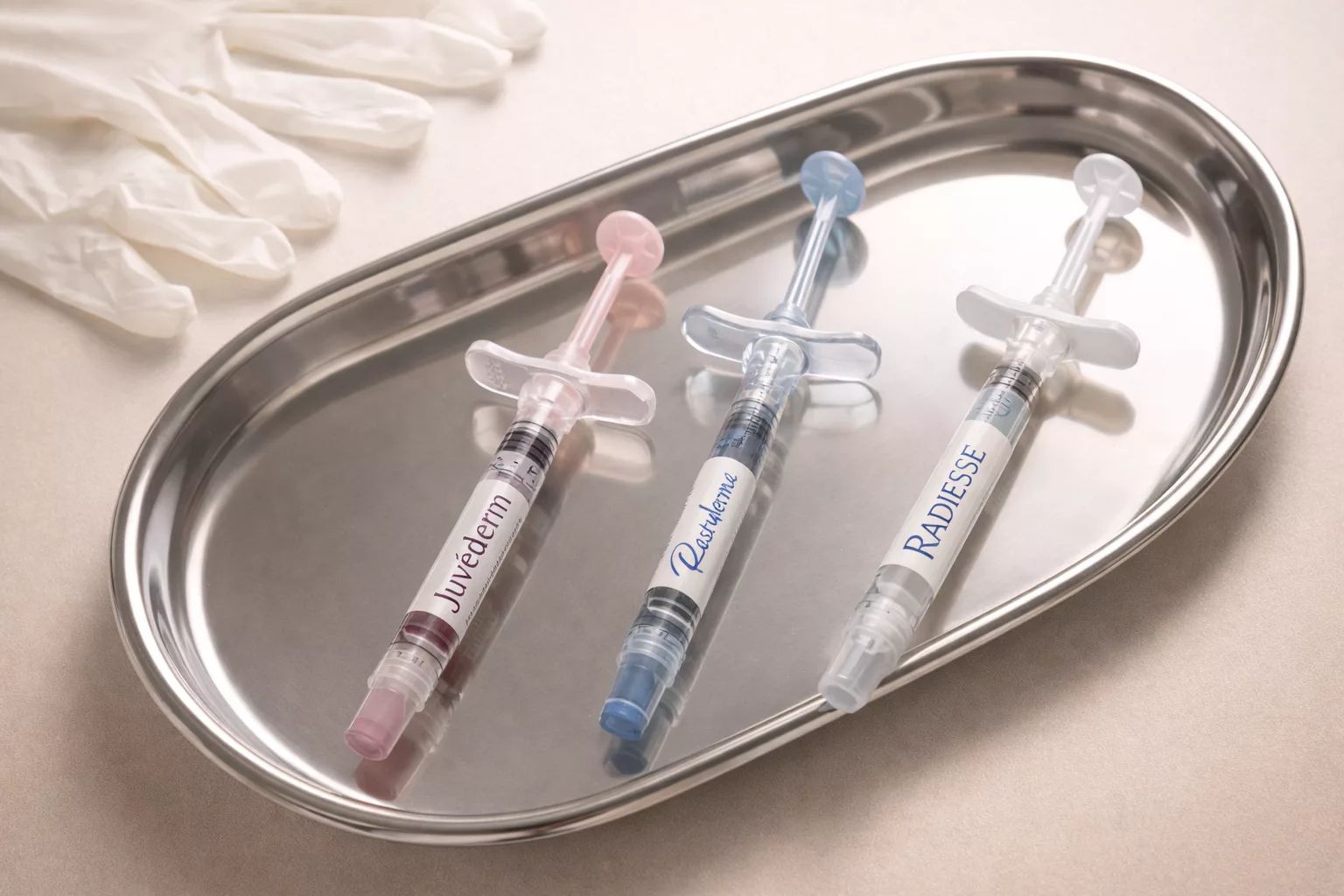
Juvederm
Juvederm is a family of hyaluronic acid fillers developed by Allergan. Different formulations within the Juvederm range specifically target lips, cheeks, and mid-to-deep facial lines. Juvederm products are known for their smooth consistency and long-lasting results.
Restylane
Another well-established option, Restylane is a family of hyaluronic acid-based fillers that providers use across a wide range of treatment areas. Its products vary in particle size and cross-linking, allowing providers to tailor the treatment precisely to the area they are addressing, from fine lines to deeper volume loss.
Radiesse
Radiesse is a calcium hydroxylapatite filler that not only adds immediate volume but also stimulates the body’s own collagen production over time. Providers commonly use it for deeper facial lines, hand rejuvenation, and areas where longer-lasting collagen support is desirable.
Benefits of Dermal Filler Treatments
Patients choose dermal fillers for a wide range of reasons. The most commonly cited benefits include:
- Immediate, visible results, most patients see improvement right after treatment
- Minimal downtime compared to surgical procedures
- Natural-looking volume restoration when performed by a skilled injector
- Customizable treatment, fillers can be placed with precision to address specific concerns
- Reversibility, hyaluronic acid fillers can be dissolved with an enzyme called hyaluronidase if needed
- Long-lasting results that typically range from 6 to 18 months depending on the product and area treated
- Versatility, fillers can be combined with other facial rejuvenation treatments for a comprehensive approach
What Happens During a Dermal Filler Appointment?
Most dermal filler appointments at Transform begin with a thorough consultation. Your provider will assess your facial structure, discuss your concerns and aesthetic goals, and recommend the most appropriate filler products and treatment plan.
Before injection, your provider typically applies a topical numbing cream to the treatment areas to maximise comfort. Most modern fillers also contain lidocaine, a local anaesthetic, which further reduces discomfort during the procedure.
The injections themselves take between 15 and 45 minutes, depending on the number of areas under treatment. Your provider will use a fine needle or a blunt-tipped cannula to place the filler with precision, sculpting and assessing the results throughout the process.
Patients are usually able to return to their normal activities the same day, though some choose to schedule their appointment when they have a day or two free to manage any initial swelling.
Dermal Filler Recovery and Aftercare
One of the most frequently asked questions we hear is: how long does dermal filler recovery take? The honest answer is that most patients experience minimal downtime, and many return to work and social activities the same day.
In the first 24 to 72 hours after treatment, it is normal to experience:
- Mild swelling, particularly around the lips and under-eye area
- Bruising at injection sites (this varies between patients)
- Tenderness or firmness at the treatment site
These effects typically resolve within a week. To support a smooth recovery, your provider will generally advise you to:
- Avoid strenuous exercise for 24 to 48 hours
- Stay out of direct sunlight and avoid heat exposure (saunas, steam rooms) for a few days
- Refrain from touching or massaging the treated area unless your provider instructs you to do so
- Stay well hydrated
Your provider will give you personalised aftercare instructions during your appointment.
Are Dermal Fillers Safe?
When a qualified, experienced provider performs them, dermal fillers have a strong safety record. Hyaluronic acid fillers, such as Juvederm and Restylane, are particularly well-tolerated because hyaluronic acid is a substance the body already produces naturally. The most significant safety risks associated with dermal filler treatment arise from inexperienced or unqualified injectors, which is why provider selection matters enormously.
Serious complications, including vascular occlusion (accidental injection into a blood vessel), are rare but can occur. Qualified medical providers know how to recognise the early signs of these complications and respond appropriately, including using hyaluronidase to dissolve filler if necessary.
At Transform, medically trained professionals perform all injectable treatments with a thorough understanding of facial anatomy. Patient safety is always the first priority.
Why Patients Choose Transform for Dermal Fillers
Transform is a Beverly Hills-based cosmetic surgery and aesthetics clinic offering both surgical and non-surgical treatments to patients seeking natural, lasting results. Our team combines clinical expertise with an artistic approach to facial rejuvenation, the foundation of every personalised aesthetic consultation we provide.
Our providers have extensive training in facial anatomy and advanced injectable techniques, and they tailor every treatment to each patient’s individual facial structure and aesthetic goals. At Transform, we design dermal filler treatments to restore volume, enhance natural contours, and create balanced, subtle improvements rather than exaggerated results.

One of the most popular non-surgical options we offer is the non-surgical liquid facelift, a treatment approach that uses strategically placed dermal fillers to restore volume across multiple facial areas. By addressing the cheeks, jawline, temples, and midface together, this technique can create a lifted, refreshed appearance without surgery.
In addition to dermal fillers, Transform offers a wide range of complementary aesthetic treatments, including chemical peels, Fraxel laser skin resurfacing, and body contouring procedures. Patients can combine these with injectables to create comprehensive, personalised treatment plans that address multiple aspects of facial aging.
At Transform, we believe the best aesthetic results come from careful assessment, honest communication, and treatment plans we build around the individual rather than a one-size-fits-all approach.
Frequently Asked Questions About Dermal Fillers
What are dermal fillers used for?
Providers use dermal fillers to restore lost facial volume, smooth out wrinkles and deep lines, enhance lip fullness, contour the cheeks and jawline, and reduce the appearance of under-eye hollows. They are one of the most versatile non-surgical cosmetic treatments available.
How long do dermal fillers last?
The longevity of dermal fillers depends on the product used and the area treated. Most hyaluronic acid fillers last between 6 and 18 months. Fillers placed in areas of high movement, such as the lips, tend to break down faster than those placed in the cheeks or jawline. Radiesse, which stimulates collagen production, can last up to two years in some patients.
Do dermal fillers hurt?
Most patients describe the sensation as mild pressure or a brief pinching feeling. Your provider applies topical numbing cream before treatment, and most filler products contain lidocaine to further minimise discomfort during the injection process.
Are dermal fillers safe?
Yes, dermal fillers have a well-established safety profile when a qualified medical professional administers them. The key is choosing a provider with the training, experience, and anatomical knowledge to perform injections safely and effectively.
How long does dermal filler recovery take?
Most patients experience minimal downtime. Mild swelling and bruising may appear in the first 24 to 72 hours and typically resolve within a week. Many patients return to normal activities the same day as their treatment.
What areas can dermal fillers treat?
Dermal fillers can treat many areas of the face, including the lips, cheeks, nasolabial folds, marionette lines, under-eye hollows, jawline, and chin. Providers can also use them for hand rejuvenation.
Can dermal fillers be reversed?
Yes, providers can dissolve hyaluronic acid fillers (such as Juvederm and Restylane) using an enzyme called hyaluronidase. This makes them a reassuring option for patients who are new to filler treatments or concerned about the outcome.
How do I know if I’m a good candidate for dermal fillers?
The best way to determine whether dermal fillers are right for you is to schedule a consultation with a qualified provider. Ideal candidates are generally in good health, have realistic expectations, and experience volume loss or contour concerns that injectable treatment can address.